



Mekari Insight
- The buyer has already done the research, your job is to be relevant, not informative. With 92% of B2B purchases starting with search and buying cycles shrinking year over year, sales teams can no longer rely on being the primary source of information. The advantage now goes to teams that arrive at the right moment with the right context, not the ones with the most slides.
- AI tools deliver competitive advantage only when deployed across a unified revenue system. Organizations with mature RevOps are more than 2x as likely to use AI in ways that actually move the needle. Without organizational alignment, AI remains a collection of expensive point solutions.
- As B2B sales grows more digital, omnichannel, and complex, fragmented systems become a ceiling on growth. Mekari’s unified software ecosystem connects sales execution, lead management, campaign automation, and revenue operations, giving teams the integrated foundation they need to compete in a faster, AI-driven market.
Every year, B2B sales teams gain more tools, data, and channels, yet results still lag. In 2023, nearly 40% of B2B sales teams missed their quotas, according to Digital Commerce 360. The challenge isn’t access to information, but knowing how to act on it quickly.
Today, B2B sales is being reshaped by AI, changing buyer behavior, and the rise of Revenue Operations that connects sales, marketing, and customer success.
Companies that adopt data-driven sales strategies are already seeing 2.3× higher revenue growth than their peers, according to McKinsey, proving the future of B2B sales is already here.
How B2B buyer behavior has changed

Today’s B2B buyers complete a large portion of their purchasing journey independently before ever speaking with sales.
Several shifts are redefining how buyers evaluate solutions and interact with vendors:
- Independent research first
According to Forrester, 92% of B2B purchases start with search, showing how strongly digital research now shapes the early stages of the buying process. 68% of B2B buyers prefer to research on their own before engaging with a sales rep. Buyers now expect to access product information, comparisons, and use cases long before a sales conversation begins. (Forrester via Aslan Training) - Faster buying cycles
The average B2B buying cycle shortened from 11.3 months in 2024 to 10.1 months in 2025, while first meaningful contact with sellers now happens 6–7 weeks earlier. Sales teams must therefore engage buyers sooner and deliver relevant insights quickly. (6sense) - AI-assisted research
94% of buyers now use large language models (LLMs) to gather information during their buying process, and 89% ultimately purchase solutions that include AI capabilities. This means buyers increasingly rely on AI-generated insights before evaluating vendors. (Corporate Visions) - Peer validation before purchase
77% of buyers read user reviews, and 54% speak directly with existing users before making a decision, making customer advocacy and reputation increasingly influential in the sales cycle. (AMPLYFI)
Buyers now enter sales conversations better informed and with clearer expectations, making relevance, expertise, and timing critical for sales teams.
Read more: Top 13 Sales Management Software for Seamless CollaborationThe rise of digital-first and omnichannel selling
Digital-first selling has quickly become the new baseline for B2B sales. According to Saleshive, by 2025, around 80% of B2B sales interactions will occur through digital channels, making hybrid and digital selling essential for modern sales teams.
Several factors are accelerating this shift:
- Millennial buyers dominating the market
About 73% of B2B buyers are millennials, many of whom prefer online research and self-service options over traditional sales interactions. (Swell) - Omnichannel drives stronger retention
Companies with strong omnichannel strategies retain 89% of customers, compared to 33% for companies without one. - Multiple channels across the buyer journey
Modern B2B selling now spans email, live chat, video calls, digital demos, and self-service portals, each supporting different stages of the decision process. (McKinsey)
Leading companies treat digital tools not as a replacement for human sales, but as the infrastructure that connects every touchpoint. The goal is a seamless experience where buyers can move between digital and human interactions without friction.
Read more: How SaaS CRM Boosts Sales and Transform Your BusinessAI and advanced analytics are reshaping the sales playbook

AI has rapidly moved from experimentation to a core part of sales infrastructure. Today, 81% of sales teams already use AI, and the impact is becoming measurable in business performance.
According to SalesHive, AI-enabled sales teams generate about 17% higher revenue growth compared to those that do not adopt AI.
Several high-impact applications are transforming how modern sales teams operate:
- Predictive lead scoring
AI analyzes behavioral signals, historical deals, and engagement patterns to prioritize prospects most likely to convert. This helps sales teams focus on high-value opportunities instead of spending time on low-probability leads. - Personalized outreach at scale
AI-powered tools analyze prospect data to tailor messaging and timing. As a result, personalized outreach can drive 29% higher open rates and 41% higher click-through rates, improving engagement across email and digital channels. (Persana AI) - More accurate sales forecasting
One of the most persistent challenges in sales management has been forecasting accuracy. AI-powered forecasting models reach around 79% accuracy, compared to about 51% with traditional forecasting methods, enabling leaders to make better planning and revenue decisions. (Persana AI) - Conversation and deal intelligence
AI tools can analyze sales calls, highlight coaching opportunities, detect potential deal risks, and recommend next-best actions in real time, helping reps navigate complex sales cycles more effectively.
Looking ahead, the shift toward data-driven sales will only accelerate. Reported by Martal Group, Gartner projects that by 2026, 65% of B2B sales organizations will move from intuition-based to data-driven decision making.
The most effective teams will use AI not to replace human sellers, but to enhance them, combining machine-driven insights with the relationship-building and strategic judgment that only people can provide.
Baca Juga: Future of Work 2026: How AI and Automation Reshape BusinessRevOps: the new architecture of B2B growth
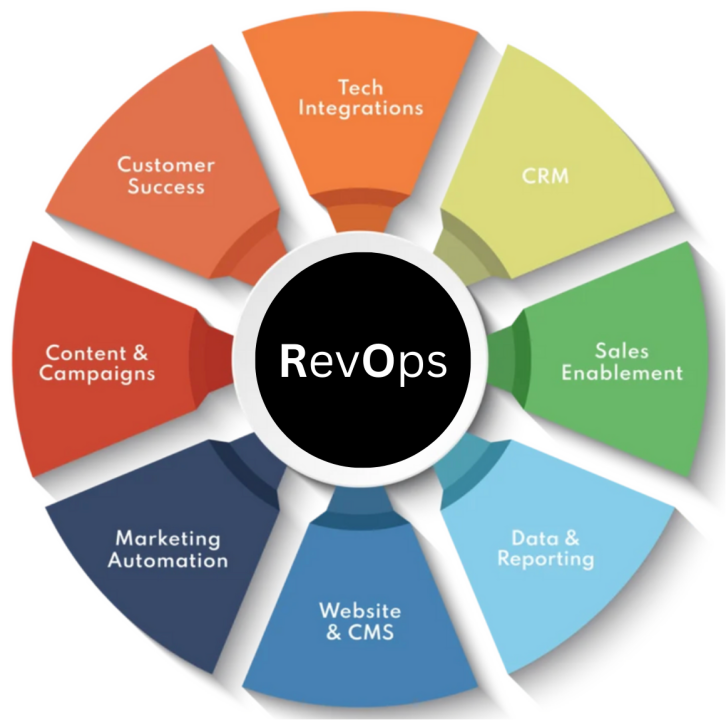
Revenue Operations (RevOps) has emerged as the operating model best suited for modern B2B go-to-market complexity.
RevOps aligns marketing, sales, customer success, service, and partner teams under a single revenue framework with shared data, metrics, and accountability for growth outcomes.
Research shows that organizations with mature RevOps capabilities consistently outperform their peers:
- Faster digital expansion
RevOps-driven organizations are 1.4× more likely to launch new digital channels and 1.9× more likely to invest in digital transformation tools. (Digital Commerce 360) - Greater product innovation
Companies with established RevOps are 2.2× more likely to successfully launch new products and services. (Digital Commerce 360) - Stronger talent development
They are 1.4× more likely to implement sales upskilling and enablement programs, improving long-term revenue performance.
RevOps maturity also strengthens how companies deploy emerging technologies. While many organizations are experimenting with generative AI in sales, RevOps-mature teams are more than twice as likely to apply it in ways that create real competitive advantage.
The difference lies not in the technology itself, but in having the organizational alignment and shared data infrastructure needed to use it effectively.
In practice, RevOps turns revenue generation into a coordinated system rather than a collection of disconnected teams, allowing data, automation, and AI to improve every stage of the buyer and seller journey.
The human element isn’t going away — it’s becoming more valuable
Despite the rapid rise of AI and automation, human interaction remains a critical part of B2B sales. In fact, Gartner predicts that by 2030, 75% of B2B buyers will prefer sales experiences that prioritize human interaction, especially for complex or high-stakes purchases.
Several trends reinforce the growing importance of human expertise in the sales process:
- Human interaction in complex deals
While buyers often rely on self-service research early in the journey, they still want trusted advisors when evaluating high-impact decisions. - Greater investment in sales talent
48% of fast-growing companies invest heavily in sales training, compared to 22% of slower-growth companies. - Stronger confidence in sales capability
51% of fast-growth companies bemlieve they have the right talent for the future, versus 30% of slower-growing peers, according to McKinsey.
Rather than replacing salespeople, AI is changing how they work. Technology increasingly handles data analysis, automation, and repetitive tasks—while human sellers focus on what matters most: building trust, understanding complex needs, and guiding buyers through critical decisions.
What B2B sales leaders must do now
The shifts reshaping B2B sales are already happening. The real question for leaders is how quickly they can adapt. Research from McKinsey highlights several actions that separate high-growth organizations from the rest.
- Assess your real capabilities
Many companies overestimate their digital and AI maturity. Sales leaders need a clear assessment of current capabilities across technology, talent, and processes before planning any transformation. - Think beyond short-term gains
More than 50% of fast-growing companies plan initiatives with at least a 12-month horizon. Building sustainable growth requires structural improvements, not just short-term optimizations. - Adopt a test-and-learn approach
Leading organizations move quickly by running small pilots, measuring results, and scaling what works, instead of waiting for perfect certainty.
Sales leaders should also examine two key questions highlighted in Deloitte’s RevOps framework:
- Are AI tools used across the entire buyer and seller journey, or only in isolated parts of the funnel?
- Have silos between marketing, sales, and customer success truly been removed?
Looking ahead, AI will continue to accelerate research and pre-sales activities, raising buyer expectations and shortening timelines. In response, sales teams will likely become smaller but more specialized, combining AI-driven insights with human expertise to handle complex, high-value interactions.
Organizations that treat this shift as a structural reinvention, not just a technology upgrade, will be best positioned to build long-term competitive advantage.
Read more: 5 Business Growth Strategy to Overcome Challenges Based on DataUnified ecosystem software to support B2B sales operations
As B2B sales becomes more digital, data-driven, and omnichannel, companies need systems that can connect every part of the revenue process—from lead generation and sales execution to finance and operations. This is where a unified ecosystem software becomes essential.
Mekari provides an unified software ecosystem designed to support modern B2B sales operations through integrated tools across the sales, finance, and operational workflows. Within one platform, companies can manage customer engagement, track sales performance, and streamline operational processes without relying on disconnected systems.
Key capabilities that support B2B sales teams include:
- Sales tracking tools
Comprehensive sales tracking helps merchandisers and field teams monitor product conditions, activities, and performance in real time. - Social media and lead management integration
Manage leads efficiently and automate follow-ups through integrated channels such as WhatsApp, Instagram, and email, ensuring faster response and better customer engagement. - E-commerce integration
Handle customer conversations across marketplaces like Shopee and Tokopedia from a centralized dashboard. - Campaign management
Increase engagement with automated and personalized campaigns, such as birthday promotions or targeted offers sent through email or WhatsApp.
Beyond sales execution, Mekari also provides supporting solutions that strengthen overall revenue operations:
- Business expense management: Manage travel expenses and reimbursement claims digitally with Mekari Expense.
- Streamlined tax reporting: Automate invoicing documents and tax deductions based on government regulations with Mekari Klikpajak.
- Multipayment management: Consolidate payments from multiple clients through bank transfers, virtual accounts, and digital wallets using Mekari Pay.
- Sales performance management: Motivate sales teams with automated recognition and reward systems through Mekari Talenta.
- Business financing access: Support sales operations and large client orders through Mekari Capital.
- Custom business software development: Build tailored applications for sales workflows, field sales tracking, or promotional programs with Mekari Officeless.
With its integrated platform, Mekari helps companies run more connected, efficient, and scalable B2B sales operations, supporting teams as they adapt to AI-driven workflows, digital-first buyer journeys, and increasingly complex revenue operations.
Explore how Mekari can support your sales team’s growth through its unified software ecosystem.
References
Gartner. ‘’Gartner Says By 2030 that 75% of B2B Buyers Will Prefer Sales Experiences that Prioritize Human Interaction Over AI’’
Martal Group. ‘’B2B Sales Funnel 2025: AI, Data & Buyer Behavior Shifts’’
McKinsey. ‘’What the future science of B2B sales growth looks like’’
