


Mekari Insight
- Expense management software helps businesses save time, reduce errors, and keep all spending transparent.
- Different tools cater to different needs, from simple reimbursements for SMBs to advanced compliance for global enterprises.
- Mekari Expense is the most complete spend management solution for businesses in Indonesia, offering automated reimbursements, corporate cards, budget controls, and integration with Mekari Jurnal — all in one platform.
Finance teams in growing companies often find themselves buried in spreadsheets at month-end — chasing receipts, manually matching transactions, and correcting errors that should never have existed in the first place.
According to GBTA, processing a single expense report manually costs roughly $58 and takes an average of 3000 hours per year, a figure that compounds quickly as headcount scales.
Expense management software addresses this directly by replacing manual, error-prone workflows with automated systems that handle everything from receipt capture to reimbursement in one place.
Rather than requiring finance staff to manage approvals through email threads and separate spreadsheets, this expense solution enforces spending policies in real time, syncs with accounting systems automatically, and gives leadership full visibility into where company money goes.
This article reviews the best expense management software options available today, what to look for when evaluating them, and how to choose the right solution for your company’s size and needs.
Key features to look for in expense management software
Not all expense management software is built the same way.
Some platforms focus primarily on reimbursements, while others cover the full non-payroll spend cycle including corporate cards, procurement, and accounts payable. Here are the core features worth evaluating before committing to any platform.
- Automated receipt capture: OCR technology reads vendor, date, and amount from a photo and matches it to the corresponding transaction automatically, eliminating manual data entry and lost receipts.
- Multi-level approval workflows: Configurable approval chains route expenses based on amount, type, or department — so routine claims move fast while high-value purchases get the right level of scrutiny.
- Policy enforcement and spend controls: The best platforms flag or block out-of-policy transactions at the point of purchase, catching maverick spend before it happens rather than during month-end review.
- Corporate card and virtual card management: Real-time card controls let finance teams set spending limits per employee, merchant, or category, with virtual cards providing an extra layer of control for vendor-specific payments.
- Accounting and ERP integration: Native connections to systems like QuickBooks, Xero, NetSuite, or Mekari Jurnal ensure approved expenses sync to the correct general ledger accounts without manual re-entry.
- Real-time reporting and spend visibility: Live dashboards show spending across teams, projects, and categories as it happens, replacing the reactive month-end scramble with continuous financial control.
- Mobile accessibility: A strong mobile experience lets employees capture receipts and submit claims immediately after a purchase, improving both data quality and reimbursement speed.
Expense management software recommendations
Here are some of the best expense management software solutions that can help you streamline and control your company’s expenses more effectively
| Expense management tools | Key features | Key Strengths | Pricing | Limitations |
|---|---|---|---|---|
| Mekari Expense | Reimbursement automation, Mekari Limitless Card, purchase management, international remittance, Mekari Jurnal integration | Part of the Mekari unified software ecosystem — automates the full spending cycle, connects expense data across business functions, and consolidates financial records into intelligent reports | Contact for pricing | Suited best only for companies expanding to or already in Indonesia. |
| Emburse | 40+ analytics dashboards, automated audits, offline receipt capture, custom policies, ERP integration | Deep configurability and enterprise-grade analytics for organizations with complex compliance requirements | Quote-based | Feature set may be excessive for small teams; advanced card options require premium plans. |
| Rydoo | AI policy enforcement, global tax compliance, instant validation, multi-currency, mobile receipt scanning | Strong international regulatory coverage, purpose-built for multinational expense workflows | ~$10/user/month | Less flexible for highly customized or legacy workflows. |
| Expensify | OCR receipt scanning, chat-style dashboard, quick reimbursements, QuickBooks/Xero integration | Fastest setup and easiest UX for small teams that need straightforward expense automation | From $5/user/month | Limited corporate card support outside the US; lacks enterprise-level controls. |
| SAP Concur | ERP sync, travel booking integration, multi-country tax compliance, customizable approval workflows | Market leader for enterprise T&E at scale, with the deepest integration into SAP and major financial systems | Custom pricing | High implementation costs, long setup time, best suited for large organizations only. |
| Pleo | Prepaid corporate cards, real-time spend visibility, mobile-first UX, auto-categorization, multi-currency | Card-first design with frictionless employee experience and strong real-time finance team visibility | Quote-based | Limited availability outside Europe; less effective for non-card expenses. |
| Wallester | Instant card issuance, real-time transaction monitoring, API integration, custom branding, spend controls | Highly customizable card infrastructure with developer-friendly APIs, ideal for fintechs building their own expense workflows | Quote-based | Relatively new with smaller market presence compared to global leaders. |
| Zoho Expense | Receipt scanning, mileage tracking, multi-currency, approval workflows, Zoho Books/CRM integration | Most cost-effective option for small businesses already operating within the Zoho product ecosystem | Free up to 3 users; from $5/user/month | Better suited for smaller teams; lacks advanced features for enterprises. |
| Brex | Corporate credit cards, real-time tracking, fast reimbursements, employee cards, cash management tools | Flexible credit terms designed for venture-backed startups, with strong real-time spend visibility | No annual fees | Available only to US-based companies; requires strong financial credentials. |
| Airbase | Unified AP + cards + reimbursements, flexible approval workflows, accounting sync (QuickBooks, Xero, NetSuite), virtual cards | Covers the broadest range of non-payroll spend categories — reimbursements, bills, and cards — in a single platform | Quote-based | Setup can take time; pricing is not transparent. |
1. Mekari Expense
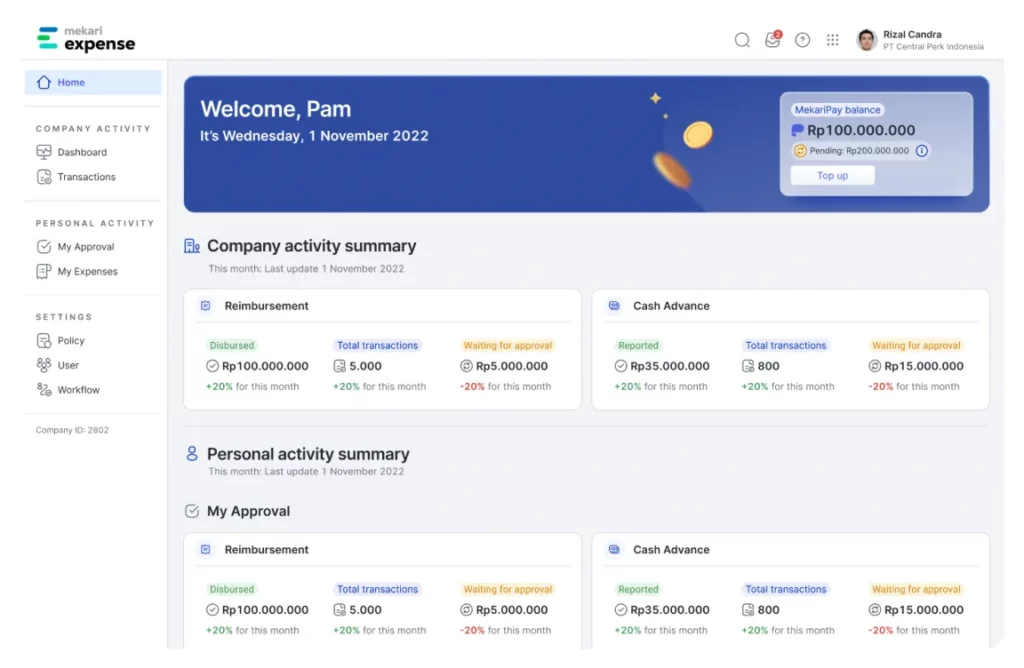
Mekari Expense is a spend management system that unifies travel, purchasing, invoice, and card expenses into one system. Built with a strong focus on SMEs in Southeast Asia, this expense management tool helps companies simplify financial reporting, stay compliant, and gain better control of spending.
Mekari Expense also provides complete control over the entire spending process—from reimbursements, corporate cards, and business travel to bill payments—all integrated into a single intuitive dashboard.
This enables finance, operations, and management teams to work faster, more accurately, and more efficiently.
Best features:
- Automated Reimbursement: Speed up claims and payouts seamlessly.
- Mekari Limitless Card: Create physical and virtual cards for business transactions directly from the app.
- Budget Allocation: Set and monitor budgets with a structured account system.
- International Remittance: Transfer payments abroad quickly and in real-time.
- Mekari Jurnal Integration: Sync directly with the accounting system for automated reporting.
- Purchase Management: Automate procurement processes and maintain full control over expenses.
- Business Travel Management: Easily manage and track employee travel costs with transparency.
- Custom Expense Policy: Create separate policies for reimbursements, business trips, per diem, and corporate card usage, with real-time validation that flags or rejects non-compliant claims automatically at the point of submission.
With its comprehensive features, Mekari Expense is the ideal solution for companies looking to manage the entire expense cycle within one integrated system.
It enhances transparency, efficiency, and flexibility—empowering businesses to maintain better financial control and make faster, data-driven decisions.
2. Emburse
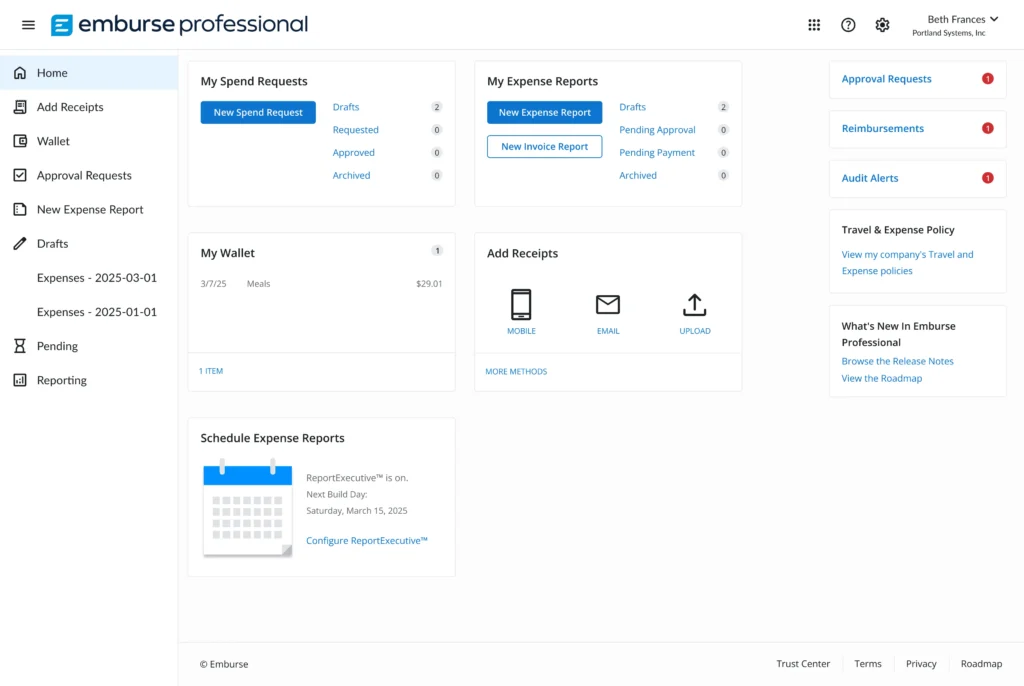
Emburse is an enterprise-focused expense management platform designed to deliver deep insights and strong automation.
This corporate expense tracking solution stands out with advanced analytics dashboards and policy enforcement features, making it ideal for organizations that prioritize compliance and data-driven decision-making.
Best features:
- Analytic dashboards: Over 40 dashboards provide real-time spend insights.
- Automated audits: Policy checks and approvals run automatically.
- Offline receipt capture: Employees can upload receipts even without internet.
- Custom policies: Configure rules that match complex business needs
- Credit card integration: Available in advanced plans for seamless card tracking.
- Cross-platform access: Accessible from both desktop and mobile devices.
Pricing: Quote-based, positioned for enterprise budgets.
Limitations / cons: Features may be excessive for small teams, and advanced card options require premium plans.
Read more: How to Manage & Track Marketing Expenses with Expense Card3. Rydoo
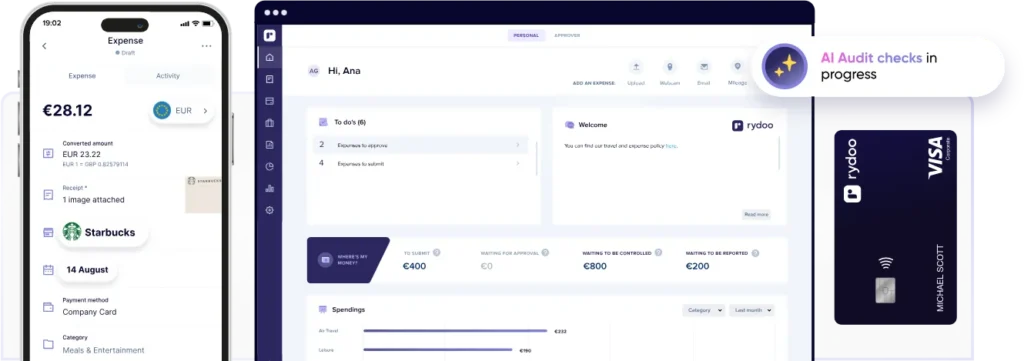
Rydoo is a globally compliant, AI-powered expense platform designed for multinational companies.
This expense management tool’s strength lies in automation and ease of use, making expense management feel more like a chat than a chore.
Best features:
- AI audits: Detects policy violations automatically.
- Global compliance: Supports international tax and expense regulations.
- Instant validation: Expenses can be approved in real time.
- Multi-currency support: Handles expenses across different currencies.
- Mobile receipt scanning: Employees can upload receipts on the go.
- Policy enforcement: Automatically ensures expenses follow company rules.
Pricing: Starts at about $10 per user per month.
Limitations / cons: Less flexible for highly customized or legacy workflows.
Read more: How to Track Business Expenses Easily4. Expensify
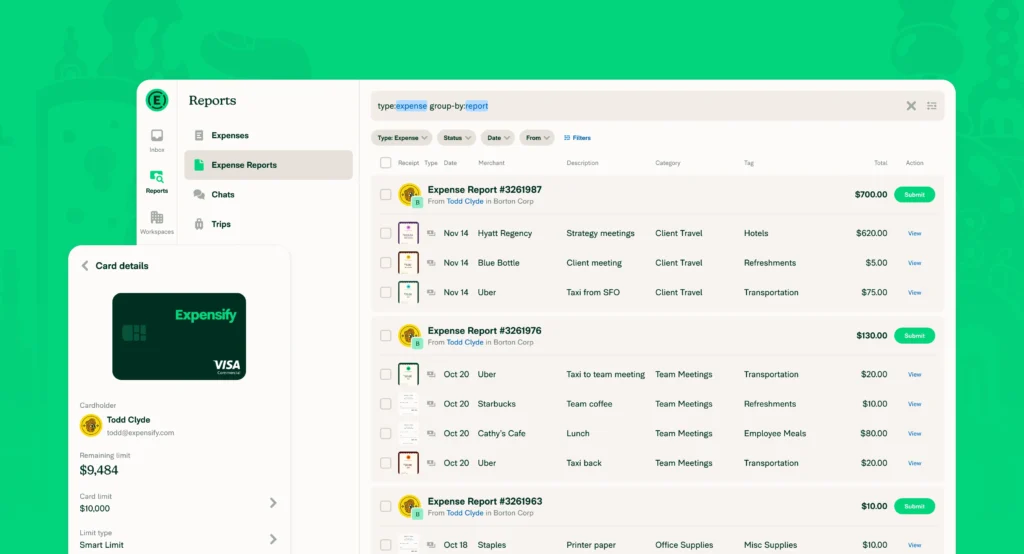
Expensify is a simple, user-friendly tool built for small and medium businesses that want quick reimbursements and easy reporting. Its strength lies in automation and ease of use, making expense management feel more like a chat than a chore.
Best features:
- Chat-style dashboard: Makes expense reporting more interactive and easy to follow.
- Smart receipt scanning: Uses OCR to capture expense data automatically.
- Quick reimbursements: Speeds up approval and payout cycles.
- Software integrations: Connects with QuickBooks, Xero, and other accounting tools.
- Basic policy enforcement: Simple rules to guide employee spending.
- Multi-device access: Works on both web and mobile.
Pricing: $5 per user per month for basic features, $9 per user per month for full access.
Limitations / cons: Limited corporate card support outside the US and lacks enterprise-level controls.
Read more: Company Expense Policy Guideline: How to Create & Start Easily5. SAP Concur
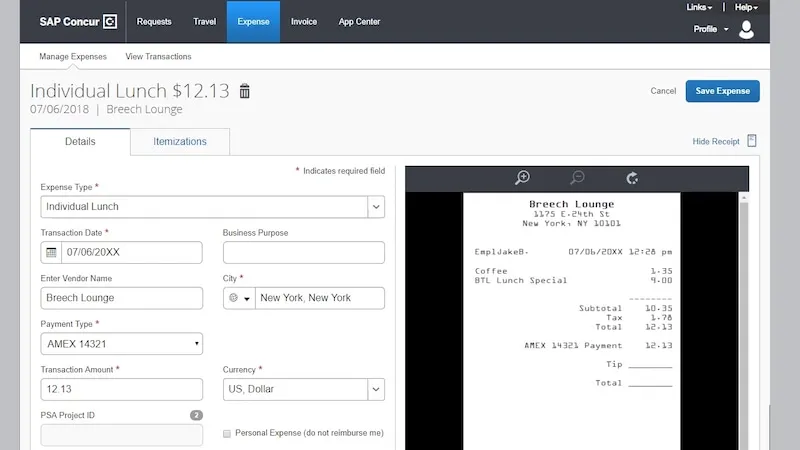
SAP Concur is a market leader in enterprise-grade travel and expense management.
It is best known for its ability to integrate with ERP systems and ensure compliance across multiple regions, making it a trusted choice for large multinationals with complex financial structures.
Best features:
- Travel integration: Connects booking directly to expense management.
- Audit tools: Automated fraud detection and compliance controls.
- Tax compliance: Supports multiple countries and tax frameworks.
- Customizable workflows: Adjust approval routes for complex setups.
- ERP integration: Syncs with SAP and other major financial systems.
- Mobile capture: Submit expenses while traveling.
Pricing: Custom pricing depending on company size and complexity.
Limitations / cons: High implementation costs, long setup time, and best suited for large organizations.
6. Pleo
Pleo is a modern, card-first expense management platform built for startups and SMEs in Europe.
Its strength lies in combining prepaid corporate cards with an intuitive mobile app, giving finance teams real-time visibility and employees a frictionless way to manage expenses.
Best features:
- Prepaid cards: Issue physical and virtual cards instantly.
- Spend visibility: Finance teams can monitor spending in real time.
- Mobile-first experience: Employees capture receipts and submit claims via app.
- Flexible spend controls: Set spending limits by team or purpose.
- Auto-categorization: Transactions are sorted into categories automatically.
- Multi-currency support: Useful for international business trips.
Pricing: Quote-based, scalable for SMEs and startups.
Limitations / cons: Limited availability outside Europe and less effective for non-card expenses.
7. Wallester
Wallester is a fintech-focused expense platform that specializes in fast issuance of physical and virtual corporate cards.
Its key strength is flexibility and developer-friendly API integration, making it ideal for startups or fintechs that want to customize expense workflows and card programs.
Best features:
- Instant card issuance: Generate new physical or virtual cards in minutes.
- Transaction monitoring: Track spending in real time.
- API integrations: Connects easily with ERP and other software.
- Custom branding: Design cards and portals with company identity.
- Spend controls: Set flexible restrictions for employees.
- Funds management: Manage card balances and cash flow efficiently.
Pricing: Quote-based, depending on features and usage.
Limitations / cons: Still relatively new with smaller market presence compared to global leaders.
8. Zoho Expense
Zoho Expense is an affordable tool that belongs to the wider Zoho business suite. Its biggest advantage is seamless integration with Zoho Books, CRM, and third-party apps, making it a cost-effective choice for small businesses that already use Zoho tools.
Best features:
- Receipt scanning: Upload and process receipts automatically.
- Mileage tracking: Record travel costs with GPS-based logging.
- Multi-currency support: Manage expenses in different currencies.
- Approval workflows: Automates approval chains for faster processing.
- Zoho integration: Works seamlessly with Zoho Books, CRM, and third-party apps.
- Policy enforcement: Basic checks for employee compliance.
Pricing: Free for up to 3 users; paid plans start at $5 per user per month.
Limitations / cons: Better suited for smaller teams; lacks advanced features for enterprises.
9. Brex
Brex is a corporate card and expense management platform built for startups and high-growth companies in the US.
Its strength lies in combining flexible corporate credit with real-time expense tracking and financial management tools, making it especially useful for venture-backed businesses.
Best features:
- Corporate credit cards: Designed for startups with flexible terms.
- Real-time tracking: Monitor spending as it happens.
- Fast reimbursements: Automates employee payouts.
- Software integrations: Works with popular accounting platforms.
- Employee cards: Issue multiple cards with individual controls.
- Cash management: Built-in account and financial tools.
Pricing: No annual fees, with terms based on credit profile.
Limitations / cons: Available only to US-based companies; requires strong financial credentials.
10. Airbase
Airbase is an all-in-one spend management platform that combines corporate cards, reimbursements, and bill payments.
Its strength is offering mid-sized companies a unified way to manage spending while scaling financial operations with tighter control and compliance.
Best features:
- Unified spend management: Covers reimbursements, bills, and cards in one tool.
- Real-time reporting: Provides instant insights into spending.
- Approval workflows: Flexible routes for different departments.
- Accounting sync: Integrates with QuickBooks, Xero, and NetSuite.
- Virtual cards: Issue cards for employees or projects.
- Audit trail: Keeps a detailed log for compliance.
Pricing: Custom, quote-based pricing depending on features.
Limitations / cons: Setup can take time, and pricing is not transparent.
How to choose expense management software
The right platform depends on how your company spends, how your finance team operates, and how much complexity your approval and reporting processes actually require.
These are the questions worth answering before evaluating any solution.
- Company size and transaction volume: Smaller teams with straightforward reimbursement needs can get by with lighter tools, while companies processing high volumes of claims, cards, and vendor payments need a platform built for that scale.
- Spend categories you need to cover: If your spending spans reimbursements, corporate cards, purchase orders, and business travel, look for a platform that handles all of them in one system rather than requiring separate tools for each.
- Accounting system compatibility: Confirm that the software integrates natively with your existing accounting or ERP system — not just via CSV export — so approved expenses flow into the general ledger without manual handling.
- Approval workflow complexity: Companies with multi-department structures, multiple approvers per transaction, or strict segregation-of-duties requirements need configurable workflow logic, not a fixed single-approver model.
- Policy enforcement needs: If your organization has strict spending policies or compliance requirements, prioritize platforms that enforce rules at the point of purchase rather than flagging violations after the fact.
- Mobile and remote usability: For teams with frequent business travel or field-based employees, mobile receipt capture and on-the-go approval capabilities are non-negotiable, not nice-to-have.
- Total cost of ownership: Beyond the per-user subscription fee, factor in implementation time, training requirements, and whether advanced features like virtual cards or ERP integration sit behind a higher pricing tier.
The best expense management software for corporate & business
When it comes to managing corporate spending, efficiency and control are essential. Among the many solutions available, Mekari Expense stands out as the best option for businesses in Indonesia.
More than just an expense management tool—Mekari Expense is a spend management system that provides a complete financial control system designed to simplify every stage of expense management.
Why Mekari Expense is the best choice:
- Automated reimbursements that cut down manual processes and speed up payouts.
- Mekari Limitless Card (physical & virtual) for seamless business transactions.
- Budget allocation tracking to keep spending within control.
- International remittance with fast, real-time transfers.
- Integration with Mekari Jurnal for automated accounting and reporting.
- Purchase management tools that streamline procurement from start to finish.
- Business travel management for easier and more transparent handling of travel costs.
For organizations aiming to scale, optimize resources, and ensure accountability across teams, Mekari Expense delivers everything needed in one integrated platform.
Start transforming the way your company manages expenses today with Mekari Expense.
