



Mekari Insight
- A company expense policy is a formal document that defines what employees are permitted to spend on behalf of the business, how much is acceptable per category, and the process for submitting and receiving reimbursements. It ensures spending decisions are consistent, budget-aligned, and protected from misuse.
- With a well-defined expense policy, you can stop fraudulent claims like fake receipts or double reimbursements before they happen.
- Using spend management tools like Mekari Expense streamlines the process by automating approvals, tracking, and enforcing budget limits, ensuring your policy is followed seamlessly across the board.
Spending decisions pile up quietly — an untracked team dinner here, a duplicate receipt there — and by the time finance catches it, months of budget have already slipped through the cracks.
According to the Association of Certified Fraud Examiners (ACFE), the typical organization loses 5% of its annual revenue to occupational fraud, a figure that includes everything from fictitious expense claims to personal purchases passed off as business costs.
A well-structured company expense policy is the primary defense against this kind of loss, giving every employee a clear set of boundaries for what they can spend, how much is reasonable, and how to get reimbursed.
This set of rules work as a shared agreement between finance and operations to reduce grey areas, speeds up approvals, and makes budget enforcement consistent across the company.
This article will walk you through why an expense policy matters, what it needs to contain, and how to put one in place without making it a document nobody reads.
What is an expense policy
An expense policy is your internal playbook for managing business spending—it sets the rules on what employees can spend on, how much is okay, and how to get it reimbursed. Think of it as a shared agreement that keeps things fair, consistent, and budget-friendly.
Without it, teams are left guessing, approvals get messy, and budgets are harder to control. But with a well-set policy, your finance team saves time, employees feel more confident, and every expense stays aligned with business priorities.
Read more: How to Track Business Expenses EasilyWhy should a company have an expense policy?
When employees make business purchases—meals, transport, client gifts—costs can pile up fast. Without clear rules, people might overspend, buy things that aren’t necessary, or worse, misuse company money.
An expense policy keeps spending on track, prevents confusion, and protects company funds.
It’s also your first line of defense against expense fraud—intentional or not. Clear guidelines help avoid grey areas and make sure everyone plays by the same rules.
What is a fraudulent expense reimbursement scheme?
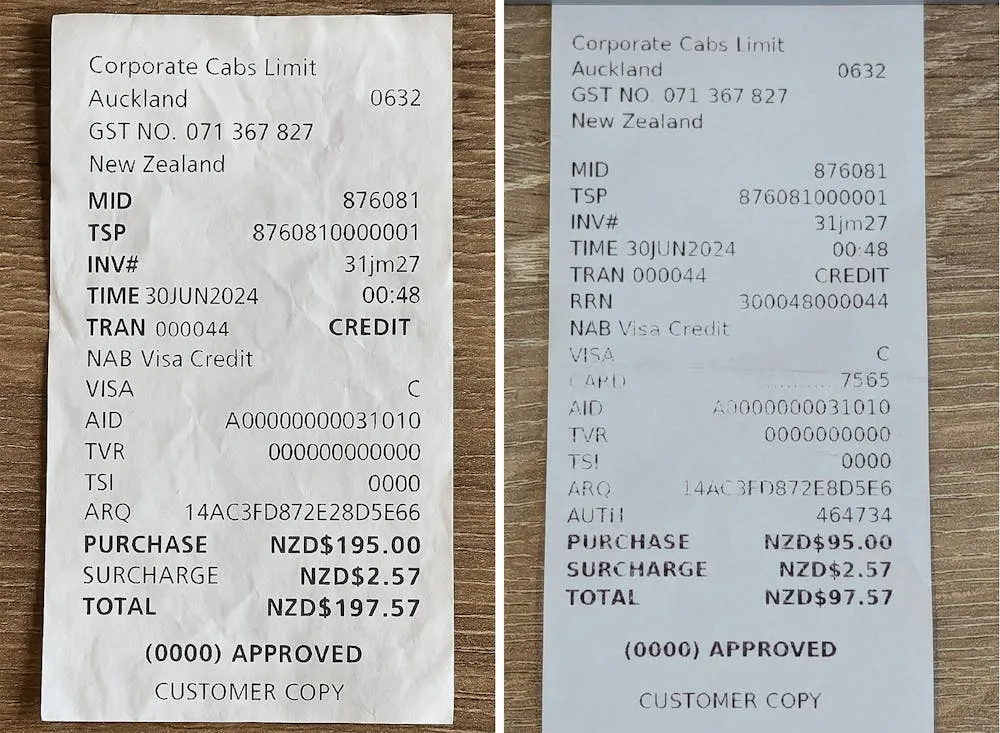
Expense reimbursement fraud happens when employees claim money they’re not supposed to. This is usually mentioned as fictitious expense reimbursements schemes.
Some common tricks include:
- Fake receipts for items never bought.
- Double claims for the same expense submitted multiple times, sometimes within days of each other.
- Personal costs passed off as business expenses, often disguised through vendor-category mismatches.
- Inflated amounts that deviate significantly from typical spending patterns for the same category or vendor.
- Old receipts recycled in new reports.
Without a strong policy, these things often slip through unnoticed—and they cost more than you think.
According to ACFE, expense reimbursement fraud schemes account for 13% of all occupational fraud cases, with a median loss of $50,000 per scheme, and in smaller organizations, that figure rises to 21%.
Baca Juga: Expense Reimbursement Guide: Best Practices and SolutionsHow to write expense policy
An expense policy helps employees understand what they can claim, keeps spending aligned with your budget, and protects your business from errors or even fictitious expense reimbursements schemes.
Here’s how to write one that’s clear, fair, and actually works.
1. Start with purpose and scope
Explain why this policy exists and who it applies to. Is it for all full-time staff? Just sales teams and managers? Setting the scope early avoids confusion down the line.
2. Define your expense categories and spending limits
The clearest expense policies organize reimbursable expenses into named categories, each with a defined spending limit.
Without this structure, employees are left guessing what is reasonable — and finance teams spend more time negotiating grey-area claims than processing legitimate ones.
Common categories and benchmark limits to consider:
| Category | What it covers | Example spending limit |
| Business travel | Airfare, accommodation, ground transport | Economy class; hotel up to $150/night |
| Meals and entertainment | Team meals, client dinners, working lunches | Up to $50/person per meal |
| Client entertainment | Hospitality events, client gifts | Up to $100/person; pre-approval required above $300 |
| Office supplies and equipment | Stationery, peripherals, software subscriptions | Up to $200 without prior approval |
| Professional development | Courses, certifications, industry events | Up to $500/year per employee |
| Mileage and local transport | Personal vehicle use, ride-sharing, taxis | Reimbursed at standard mileage rate |
Limits should reflect your company’s actual cost environment and be reviewed annually as market rates shift.
Read more: 25 Essential Business Expense Categories & How to Optimize It 3. Set clear rules for non-reimbursable expenses
Defining what the company will not cover is just as important as defining what it will.
Vague or missing non-reimbursable rules are one of the most common entry points for expense reimbursement fraud. When boundaries are unclear, personal purchases can be passed off as business expenses with minimal scrutiny.
Expenses that are typically non-reimbursable include:
- Personal travel add-ons: Flight upgrades, extended hotel stays, or detours unrelated to the business purpose of a trip
- Gym memberships and personal wellness: Unless the company has a formal wellness benefit program with its own budget
- Luxury or premium upgrades: Business-class travel, five-star accommodation, or premium car rentals without documented pre-approval
- Meals with no business purpose: Personal dining during business travel where no client or team meeting is involved
- Personal purchases disguised as business expenses: Items submitted under generic vendor names or categories inconsistent with the stated business purpose
- Fines, penalties, and personal subscriptions: Parking fines, streaming services, or any cost that primarily benefits the employee personally
Listing these explicitly removes ambiguity for employees who genuinely want to comply and closes the grey areas that make fraudulent claims harder to reject.
According to ACFE, billing schemes, which where fraudulent invoices or fictitious vendors are used to extract company funds account for 22% of all asset misappropriation cases, with a median loss of $100,000 per scheme.
Read More: Business Trip Policy Sample & Best Compliance Tools4. Establish how reimbursement works
Once your expense categories and non-reimbursable rules are in place, the next step is defining how employees get reimbursed:
- Submission method: Specify the channel employees should use, whether through expense management software, a standardized form, or email to finance.
- Processing time: Set a clear turnaround expectation (e.g., 7–10 business days from submission approval).
- Payout method: State how funds are disbursed, whether via bank transfer, payroll inclusion, or direct deposit.
5. Set clear reporting and approval steps
Lay out how employees should submit claims, who approves them, and what the timeline looks like. Mention if you’re using email, Google Forms, or a proper expense management system. The smoother the process, the less frustration for everyone involved.
6. Spell out documentation rules
Require receipts for every claim—ideally itemized. You can also allow card statements or e-invoices when relevant. Clear documentation prevents back-and-forth with finance, and helps flag fictitious claims, like edited receipts or duplicated submissions.
7. Review and update your policy regularly
Your business evolves, and so should your expense policy. New tools, remote work setups, or spending habits might make parts of your policy outdated. Aim to review it at least once a year—or sooner if big changes happen.
Read More: Top 9 Enterprise Low Code Platform to Accelerate Development 70%8. Use technology to automate and enforce it
Writing a clear expense policy is necessary, but enforcing that policy is the one that determines whether it actually works. As transaction volumes grow, manual review alone cannot catch every violation consistently.
Spend management tools like Mekari Expense address this by embedding policy rules directly into the submission workflow, with AI-powered fraud detection system that analyzes each transaction across three layers:
- Unusual amount detection: Flags submissions that deviate significantly from historical spending patterns within the same category or vendor
- Vendor legitimacy checks: Identifies mismatches between vendor names and expense categories, and detects unregistered or rarely used vendors
- Duplicate detection: Flags near-identical submissions filed within a short window using fuzzy matching logic
Each transaction is assigned a risk level with clear reasoning, giving approvers structured signals to act on rather than gut checks.
The result is enforcement that is consistent, auditable, and proactive, catching non-compliant submissions before approval, not weeks later during reconciliation.
Expense policy best practices
Here are some key strategies for developing and maintaining an expense policy that works:
1. Clarity is key
The policy should be straightforward and easy to understand, avoiding complex terminology. Simple, clear language ensures everyone can follow the rules without confusion.
2. Adapt over time
As your business grows, your policy should grow with it. What worked in the early days might not be suitable in the long run, so it’s important to keep the policy current and flexible to meet new needs.
3. Easy access
Make sure employees can easily access the policy, whether it’s through the company intranet, a printed handbook, or expense management software. This is particularly important for employees who travel often and need quick access to guidelines.
4. Support available
Designate a point of contact for any questions or clarifications regarding the expense policy, so employees know where to turn if they need assistance.
Remember that a well-crafted expense policy should give employees the freedom to make decisions within clear guidelines. This balance of control and autonomy is achieved through three main principles:
- Pre-approval for expenses: Set clear approval rules, allowing team leaders to prioritize and approve expenses in advance.
- Real-time monitoring: Track transactions in real-time to prevent out-of-policy spending and stay within budget.
- Post-spending communication: Make it easy for employees to submit receipts and information through multiple channels.
Starting company expense policy easily through Mekari Expense
Establishing an effective company expense policy is crucial for maintaining control over financial resources. However, the real challenge is making that policy stick at every transaction, not just on paper.
Mekari Expense offers a spend management system that can support the entire expense management process for both large enterprises and small-medium businesses.
This spend management software has the capabilities to enforce your policy automatically at two critical points in the workflow:
- At the point of spending: Issue Mekari Limitless Card (corporate cards), in both Virtual Corporate Cards (VCC) and physical debit cards with category-level spending limits, ensuring employees operate within defined boundaries from the moment a purchase is made
- At the point of approval — the Fraud AI Checker, powered by Airene AI, analyzes every expense submission in real time and classifies risk across four levels (None, Low, Medium, High), surfacing anomalies with transparent reasoning so approvers can make informed decisions before funds are released
Mekari Expense is also part of the Mekari unified software ecosystem, enabling operational automation, seamless integration, and intelligent reporting for businesses in Indonesia through an integrated SaaS platform.
Strengthen your company’s expense controls and prevent fraud before it happens with Mekari Expense and our corporate card solution.
References and methodology
Methodology
Methodology
Articles published by Mekari Desty are developed using trusted sources, including official data, company reports, academic research, and insights from industry practitioners. Whenever possible, we refer directly to primary sources before drawing conclusions. Our editorial team reviews and verifies the information to ensure accuracy and relevance. All references are listed so readers can trace each piece of information back to its original source.
Our editorial standards
Our editorial standards
- Primary source first: We consult official product documentation and pricing pages directly, not secondhand summaries or aggregator sites.
- Fact-checking: All product features, pricing, and claims are cross-verified against each platform’s official website at the time of writing.
- No paid placement: Tools are selected based on relevance and fit for Indonesian businesses, not commercial arrangements. Mekari Desty is included as a first-party product and is transparently labeled as such.
- Regular review: Articles are periodically updated to reflect product changes or shifts in market relevance.
References
References
Spendesk. ”Expense policy 101: understanding the basics”
Indeed. “Business Expenses Policy Template (With Examples and Tips)”
