



Mekari Insight
- With mentions of “revenue growth” on earnings calls rising nearly 12% globally in Q4 2025, the desire to scale has never been stronger. Yet 80.3% of small businesses are still struggling with inflation, and nearly 4 in 10 hold less than one month of operating cash. Ambition without infrastructure is one of the most common reasons growth stalls.
- Rising costs, workforce complexity, cash flow gaps, supply chain fragility, and compliance burdens don’t appear on pitch decks but they’re the forces that determine whether a growth strategy actually lands. Companies that address these challenges proactively, rather than reactively, are the ones that scale with durability.
- Strategy alone isn’t enough. Businesses that grow successfully are those backed by integrated tools that give them visibility, agility, and control across every function. Mekari unified software ecosystem brings HR, finance, tax, CRM, and operations into one connected platform, so your systems grow as fast as your ambition does.
Most business owners want their companies to grow, but fewer are fully prepared for the challenges that come with scaling. According to BCG (2026), mentions of “revenue growth” on corporate earnings calls increased nearly 12% globally in Q4 2025, showing that growth remains a top priority for many organizations.
Yet the reality is often more complicated. Bluevine (2025) reports that 80.3% of small businesses faced inflation-related challenges, and nearly 4 in 10 have less than one month of operating cash.
This gap shows that sustainable growth requires more than ambition, it requires preparation and strategies that can handle the pressures of scaling.
Why is growing a business so hard? (and why so many fail)

Growing a business isn’t just about increasing revenue. As a company expands, its operations, systems, and financial pressures also become more complex. Processes that worked well when the team was small often start to break down as the company grows.
According to The Kaplan Group, 75% of companies say rising costs of goods, services, or wages are their biggest financial challenge, while 57% struggle to reach customers and grow sales.
To grow sustainably, businesses need more than ambition, they need the ability to manage these growing complexities with disciplined execution. In practice, scaling companies commonly face several obstacles, such as:
- Rising operational costs that reduce profit margins
- Inefficient processes that can’t keep up with business growth
- Difficulty reaching new customers or expanding market share
- Limited resources and cash flow pressure
- Operational complexity as teams, systems, and data increase
Businesses that succeed in scaling are those that recognize these challenges early and prepare strategies to handle them. Below are several common challenges businesses face when growing, and practical ways to overcome them.
The 7 biggest challenges in business growth
As businesses grow, new challenges emerge that often weren’t visible at earlier stages.
Operations become more complex, costs increase, and decision-making requires better systems and data. Below are seven of the most common obstacles companies face when scaling and why they matter.
1. Cost pressures and inflation
Inflation can quickly erode profit margins and slow growth. Bluevine reports that 80.3% of small businesses faced inflation-related challenges in 2025, with more than 40% significantly impacted by rising operating costs.
When expenses for goods, labor, and overhead rise faster than revenue, businesses must rethink their cost structures and prioritize spending that directly supports growth.
2. Workforce and HR challenges
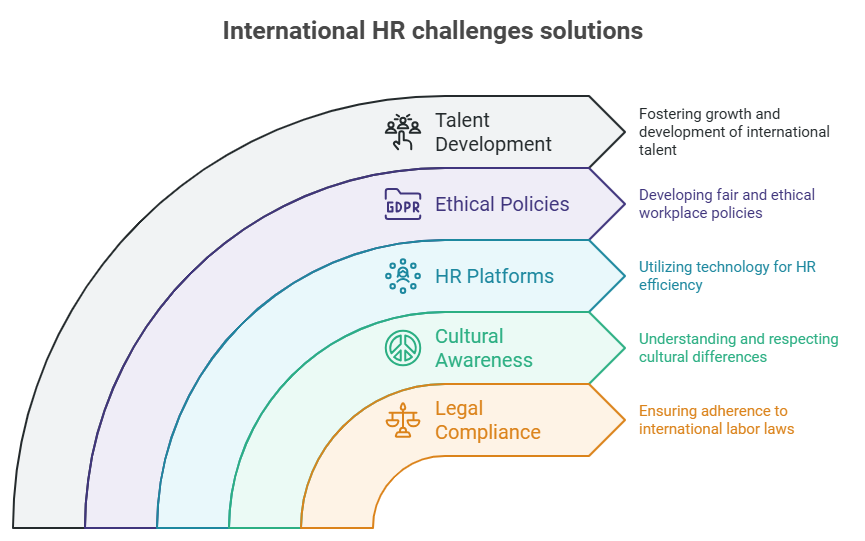
People are essential to growth, but managing a larger workforce introduces new complexities. J.P. Morgan reports that 46% of business leaders cite workforce challenges as their top concern, including hiring difficulties, staff shortages, and retention issues.
As organizations expand, HR responsibilities grow to include payroll management, compliance with labor regulations, and maintaining engagement across larger teams.
Read more: Top 10 HR SaaS Companies by Function to Simplify HR Workload3. Cash flow management and access to capital
Revenue growth does not always mean strong cash flow. The Kaplan Group reports that uneven cash flow affects 51% of small businesses, making it one of the most common financial challenges.
At the same time, borrowing has become more difficult—53% of business owners say current interest rates make debt too expensive, according to ChalifourConsulting. Without reliable access to capital, businesses may struggle to invest in new opportunities.
4. Data and business intelligence needs
As companies scale, visibility across operations often becomes harder. Decisions that once relied on direct oversight now require reliable data.
Quantive reports that 92% of executives believe organizational agility is critical, yet many companies still lack the data systems needed to support it.
Business intelligence tools help transform fragmented data into insights that support faster and more confident decision-making.
5. Supply chain complexity
Growth typically brings more suppliers, products, and logistics challenges. However, many businesses still rely on manual processes to manage supply chains.
ChalifourConsulting reports that only 19% of small businesses used technology to manage supply chain challenges in 2024. As complexity increases, companies without proper systems risk inefficiencies, delays, and operational disruptions.
6. Intensifying competition
Expanding into new markets often means facing stronger competitors. According to BCG, 2025 saw an increase in megadeals worth over $10 billion, while private equity firms hold around $2 trillion in undeployed capital.
This means competition is not only coming from traditional rivals but also from well-funded companies capable of reshaping industries through acquisitions and aggressive expansion.
7. Growing compliance responsibilities
As businesses scale, they also face more complex regulatory obligations. Companies must comply with requirements related to taxation, data privacy, employment law, and industry-specific regulations.
Laws such as GDPR and CCPA illustrate how compliance responsibilities grow as organizations expand. Without proper processes and systems, these obligations can quickly become costly risks.
Read more: Top 12 Future Business Challenges You Need to KnowHow can companies face business growth challenges?
Businesses can respond to growth challenges by strengthening the systems and strategies that support scaling. Key actions include:
- Costs and inflation: build stronger cost discipline
Instead of simply cutting expenses, companies should evaluate spending based on its long-term impact and redirect resources toward investments that support efficiency and growth. - Workforce: automate HR infrastructure and support employees
As teams grow, HR management becomes more complex. Automating payroll, compliance, and administrative processes allows leadership to focus more on employee engagement, retention, and development. - Cash flow: improve financial visibility and diversify funding
Businesses need real-time visibility into their financial position to manage liquidity effectively. Diversifying funding sources, such as credit lines or strategic partnerships, also helps maintain stability during expansion. - Data and BI: create a single source of truth
Growing organizations often struggle with fragmented data across departments. Implementing business intelligence systems helps unify data and enables faster, more accurate decision-making. - Supply chain: diversify suppliers and plan proactively
Relying on a single supplier increases operational risk. Companies should diversify suppliers and use demand forecasting to anticipate market changes and manage inventory more effectively. - Competition: strengthen differentiation and customer relationships
As competition intensifies, businesses must focus on what makes them unique while strengthening relationships with existing customers to build long-term loyalty. - Compliance: integrate compliance into business operations
Regulatory requirements grow as businesses scale. Embedding compliance systems and processes early helps reduce risk and ensures the organization can adapt to evolving regulations.
Business growth strategies every company needs to prepare
Responding to growth challenges is important, but companies also need proactive strategies that make growth more structured and sustainable. Based on BCG’s 2026 framework, the following strategies help organizations scale more effectively.
1. Set a clear and measurable growth target
Companies need a clear growth equation that defines how expansion will happen. This includes setting measurable targets and identifying where growth will come from, whether through organic expansion, new markets, partnerships, or acquisitions.
When growth goals are specific and measurable, leadership can align strategy and resources more effectively.
2. Manage growth with structured governance
Growth should be treated as a structured program rather than an informal objective. This means setting clear milestones, assigning ownership at the leadership level, and tracking progress regularly.
Many organizations also create growth dashboards to monitor performance and ensure leadership can quickly identify gaps between targets and results.
3. Use AI to accelerate innovation
Artificial intelligence is increasingly becoming a key driver of business growth. BCG reports that companies successfully scaling AI achieve 1.7 times higher revenue growth and produce 3.5 times more patents compared to companies that have not adopted it effectively.
AI helps reduce the cost and time needed to develop new products, analyze data, and improve operational efficiency.
Read more: Future of Work 2026: How AI and Automation Reshape Business4. Develop a long-term M&A capability
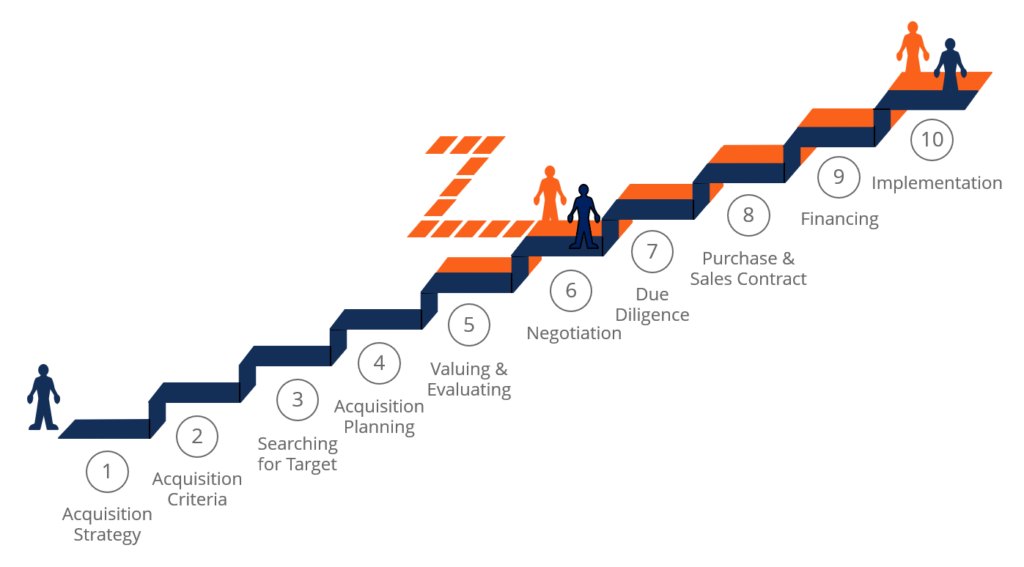
Mergers and acquisitions should be approached as an ongoing capability rather than a one-time opportunity. Companies that regularly pursue mergers and acquisitions often outperform those that engage in deals occasionally.
Maintaining a list of potential targets, building relationships early, and preparing strong post-merger integration processes helps businesses capture greater value from acquisitions.
5. Protect and strengthen company culture
Rapid growth can put pressure on company culture if it is not actively maintained. As teams expand, organizations need to reinforce shared values, communication, and employee engagement.
Maintaining a strong culture helps improve retention, supports performance, and ensures new employees align with the company’s long-term vision.
Unified ecosystem software to keep track productivity and operations
As businesses grow, managing productivity and operations across different departments becomes more complex. Disconnected systems often create data silos, slow decision-making, and increase operational inefficiencies. Using a unified ecosystem software helps companies keep operations connected and easier to manage as they scale.
Mekari offers unified software ecosystem designed to help businesses in Indonesia streamline operations, improve productivity tracking, and manage growth more effectively. By integrating multiple business functions into one platform, Mekari allows companies to reduce system fragmentation and gain better visibility across their organization.
Within a single ecosystem, businesses can manage key operations through:
- Mekari Talenta: HRIS and payroll management to support workforce productivity
- Mekari Jurnal: accounting and ERP system for financial management and reporting
- Mekari Qontak: CRM and omnichannel platform to manage customer interactions
- Mekari Klikpajak: tax management and compliance automation
- Mekari Expense: expense management and corporate card for better spending control
- Mekari Officeless: custom software and workflow automation to streamline operations
- Mekari Sign: digital signature and contract management
- Mekari Desty: POS marketplace and offline retail management
- Mekari Flex: employee benefits management
Because all products are designed to work within one ecosystem, data flows seamlessly across departments without requiring complex integrations. This allows companies to monitor productivity, maintain operational efficiency, and support sustainable business growth.
Explore Mekari unified software ecosystem and find the solution that fits your business needs.
References
BCG. ‘’The CEO’s Guide to Growth in 2026: Seizing Opportunity’’
Bluevine. ‘’Bluevine’s 2025 Small Business Growth & Trends Report’’
J.P. Morgan. ‘’U.S. 2025 Business Leaders Outlook Report’’
Sage. ‘’7 business growth challenges to anticipate and overcome’’
The Kaplan Group. ‘’54 Small Business Statistics for 2025’’
