



Mekari Insight
- Vendor management is a strategic process of selecting vendors, negotiating contracts, managing performance, and mitigating risks to ensure maximum value, cost control, and consistent quality in goods and services for business.
- Challenges in vendor management can hinder business efficiency. If left unaddressed, this can increase costs, slow down processes, and reduce service quality.
- Mekari Expense’s Vendor Management System helps businesses monitor entire procurement flow in one platform: invoices are recorded automatically, approval processes are faster, and vendor payments are more secure.
One of the important aspects of the procurement process is collaboration with vendors. However, many companies struggle to keep the flow efficient—from unclear expense records and fragmented communication to vendor performance that is difficult to evaluate.
Although 58 percent of respondents have mapped their tier-two suppliers, only fewer than half of them say they have regular direct contact with those companies. – McKinsey
This limited engagement with deeper-tier suppliers highlights a common visibility and relationship gap that can amplify risks and inefficiencies in managing vendor.
Structured vendor management plays a key role in solving these problems. This article will discuss what vendor management is, its processes, and how digital solutions can simplify the entire workflow.
What Is Vendor Management?

Vendor management is a strategic process for managing the entire lifecycle of vendors and suppliers, from qualification, selection, contract negotiation, to risk management and vendor performance monitoring.
The main objective of vendor management is to obtain the best value from supplier collaborations, control procurement costs, and ensure the quality of goods and services provided by vendors.
This process includes oversight of goods and services delivery, quality monitoring, cost control, and contract management so that all activities align with business needs and carry minimal risk.
Why is vendor management important for business?
With structured vendor management, businesses can gain many benefits, including:
- Save costs through better contract negotiations and performance monitoring.
- Increase operational efficiency with more structured procurement processes.
- Ensure the quality of goods and services meets agreed standards.
- Mitigate risks related to supply chain disruptions, compliance, or security vulnerabilities.
- Gain a competitive advantage through access to innovation and market information from vendors.
- Improve vendor compliance and ensure every good or service meets company standards.
Vendor Management Workflow
To ensure effective and mutually beneficial relationships with vendors, companies need to follow a structured vendor management workflow.
Here are the common stages in vendor management:
1. Vendor Qualification and Selection (Sourcing)
The vendor management process starts with finding vendors that match your needs—not only in terms of price, but also reputation, capacity, and track record.
Companies usually request proposals from goods and services providers using RFQ (Request for Quotation) or RFP (Request for Proposal) methods.
After proposals are received, compare several candidates before deciding on the most suitable vendor to collaborate with.
2. Contract Negotiation

After selecting the vendor, the next step is to draft the collaboration contract.
At this stage, all agreements are documented, including what the vendor will provide, collaboration duration, price, delivery schedule, payment terms, SLA (Service Level Agreements), KPI (Key Performance Indicators), and other important clauses.
A clear contract from the beginning will minimize the risk of misunderstandings later on.
3. Vendor Onboarding
Before starting to do their work, the vendors needs to be “introduced” and registered in the company’s system.
This registration includes collecting data such as contact information, bank account details, legal documents, and others.
Onboarding ensures the vendor is officially registered and ready to carry out transactions both administratively and operationally.
4. Vendor Performance Monitoring (Monitoring & Performance Management)
Collaboration does not end with the contract. Companies must monitor vendor performance in real time and periodically using data-based metrics.
For example:
- Are deliveries on time?
- Is the product quality consistent?
- Are they responsive to emerging needs?
This monitoring is essential to maintain consistent service standards.
4. Risk Management
Companies also need to monitor potential risks from the vendor side—operational, financial, or compliance-related.
For instance, risks of supply delays, contract breaches, or legal compliance issues.
Therefore, companies must proactively identify and manage risks before they affect operations.
Read More: Procurement Fraud: How to Spot Signs and Prevent Schemes5. Ordering and Delivery
Once everything is ready, the company can start placing orders. The vendor will process and deliver goods or services according to the agreement.
At this stage, it is important to verify that specifications and deadlines are met, and to perform quality checks before proceeding to payment.
6. Vendor Payment
Once goods or services are received and verified, payment can be processed. Usually, there is a three-way matching between the invoice, purchase order, and contract.
Timely payment is crucial to maintain good relationships and ensure continued service from the vendor.
Read More: Best AI for Accounts Payable Solutions for Businesses7. Evaluation and Development
An equally important part of vendor management is evaluating and planning improvements for vendors you have already worked with.
In short, conduct periodic assessments of the vendor’s overall performance.
Focus on key indicators such as delivery timeliness, product/service quality, contract compliance, and satisfaction level.
Evaluation results are used for decisions such as contract renewal, improvement plans, or vendor replacement.
6 Key Strategies to Optimize Vendor Management
To ensure collaboration truly supports business growth, companies need strategies that make the process more efficient, transparent, and mutually beneficial.
Here are some practical steps you can implement:
1. Automatic and Real-Time Expense Control
Integrated business expense control helps maintain transaction accuracy and transparency. Processes such as payment approvals, expense recording, and expense tracking can run automatically according to procurement policies.
This approach not only saves time, but also reduces the risk of manual errors or misuse.
Read More: Top 10 Best Business Expense Tracking Software2. Centralized Vendor Database
Storing all vendor data in one platform makes it easier for teams to track performance, ensure compliance, and manage contracts.
Automation also speeds up onboarding, evaluation, and payment processes, saving both time and costs.
3. Self-Service for Vendors
Give vendors access to update their own data, submit invoices, or check payment status.
This feature reduces the workload on the procurement team, speeds up communication, and makes vendors feel more involved.
4. Routine Performance Evaluation
Conduct regular assessments of whether deliveries are on time, quality meets standards, and contract compliance is maintained. This evaluation helps sustain performance consistency and encourages improvements where needed.
5. Consistent Communication
Build healthy relationships through regular communication—reports, meetings, or informal discussions.Openness allows both parties to resolve issues more easily and discover new collaboration opportunities.
6. Use a Vendor Management System
To implement all the strategies above more easily, you can use a Vendor Management System.
A Vendor Management System (VMS) is an integrated software that automates and optimizes the entire vendor lifecycle.
With a VMS, the full vendor management workflow runs automatically—from qualification and selection, contract management, performance management, to payment and evaluation processes.
Using a VMS also helps companies improve efficiency, transparency, and control over vendor relationships, minimize operational risks, and support data-driven decision making.
Read More: Top 7 Procurement Automation Software to Streamline Procurement CycleBest Vendor Management System Recommendation
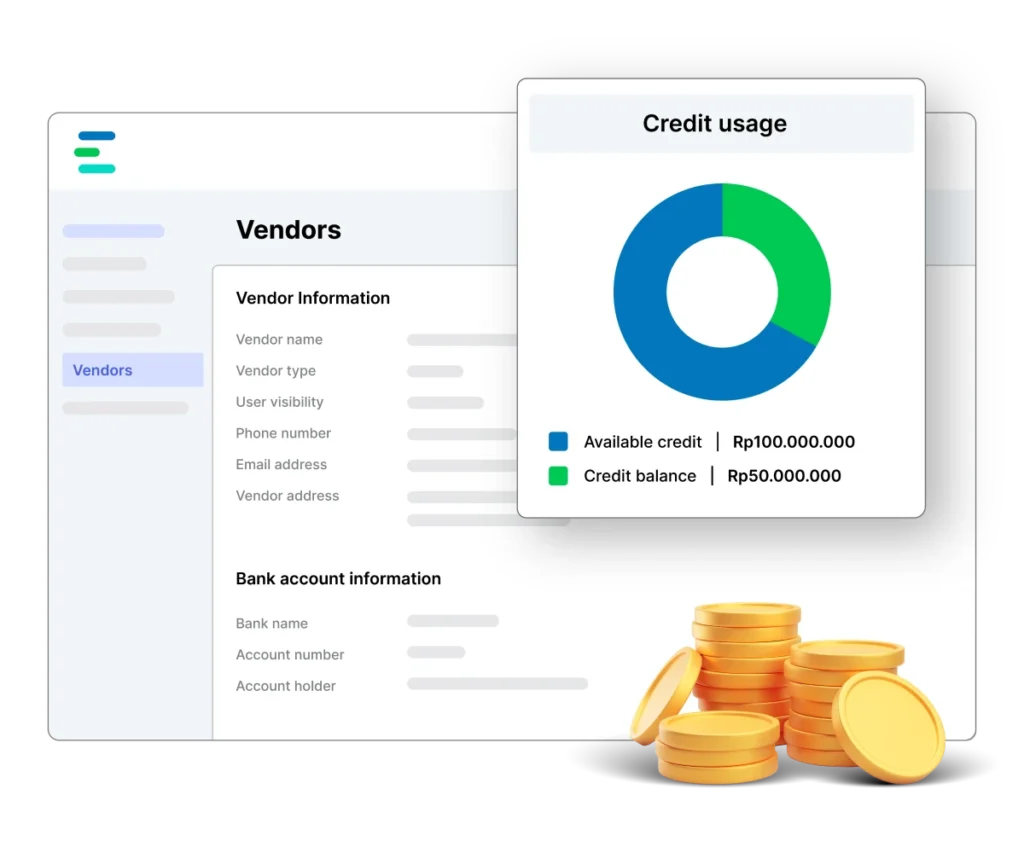
Structured vendor management can reduce costs, maintain quality, and build long-term partnerships with vendors. With the right system, vendor management becomes much easier.
Mekari Expense is the best Vendor Management System choice to support your vendor management. It delivers an integrated procurement flow—all in one platform—with the following features:
- Vendor invoices are automatically recorded in the system without manual input, making the process faster and more accurate.
- The entire procurement process—from requests, approvals, to payments—can be monitored in real time on a single dashboard.
- Vendors can be paid directly from the system, complete with neatly recorded approval and transaction history.
With Mekari Expense’s Vendor Portal, vendor management becomes more efficient, transparent, and fully controlled. Try Mekari Expense for free now.
References
Assembled. “The ultimate guide to effective vendor management: Overcoming challenges and best practices”
JP Morgan. “Vendor Management Guide: Tips & Strategies for Success”
