



Mekari Insight
- As workloads continue to increase, workflow automation helps teams work faster and more efficiently.
- With the ability to identify patterns and make automated decisions, AI makes workflows smarter and more responsive.
- Mekari Officeless is one of the best workflow automation solutions. With low-code/no-code capabilities, cross-system integration, and a visual workflow builder, Mekari Officeless helps businesses build automation that is relevant, fast, and connected.
Amid increasingly busy work schedules, many teams are realizing an important fact: much of their time is spent on tasks that could actually be automated. This is why many businesses are starting to rely on AI for workflow automation tools.
This technology can complete tasks faster, allowing teams to focus on more strategic work. This article highlights 7 of the best AI workflow automation platforms. Let’s explore them further.
What is workflow automation?
Workflow automation refers to the use of software to automate a sequence of tasks or business processes that were previously performed manually.
With predefined rules and triggers, the system automatically routes tasks, data, or notifications to the right person or system.
The difference between traditional workflow automation and ai-based automation
Not all workflow automation works the same way. The difference lies in the system’s level of intelligence and flexibility.
- Traditional workflow automation works based on “if/then” logic (rule-based). It is suitable for structured and repetitive tasks, such as: “If a form is submitted, send a confirmation email.”
- AI-based workflow automation includes capabilities such as machine learning, natural language processing (NLP), and data analysis. These systems can identify patterns, learn from previous activities, and make decisions without explicit rules.
Functions and benefits of workflow automation
Workflow automation can be used to:
- Manage approvals and task assignments automatically
- Store and process data without manual input
- Send notifications and real-time status updates
- Connect with other systems such as CRM, ERP, or HRIS
For businesses, the advantages include faster processes, fewer errors, time and cost savings, better transparency, and easier tracking.
Below are several recommended workflow automation platforms, each with features that can be adapted to different business needs.
Baca Juga: Guide to Choose Low Code vs Traditional Development1. Mekari Officeless
Mekari Officeless is a low-code/no-code platform for building applications, systems, and workflows quickly without full-scale coding.
Suitable for both technical and non-technical teams, Mekari Officeless allows companies to design internal solutions tailored to their needs with high efficiency and full control over business workflows.
The platform includes two core features that support comprehensive integration and automation.
Workflow Builder
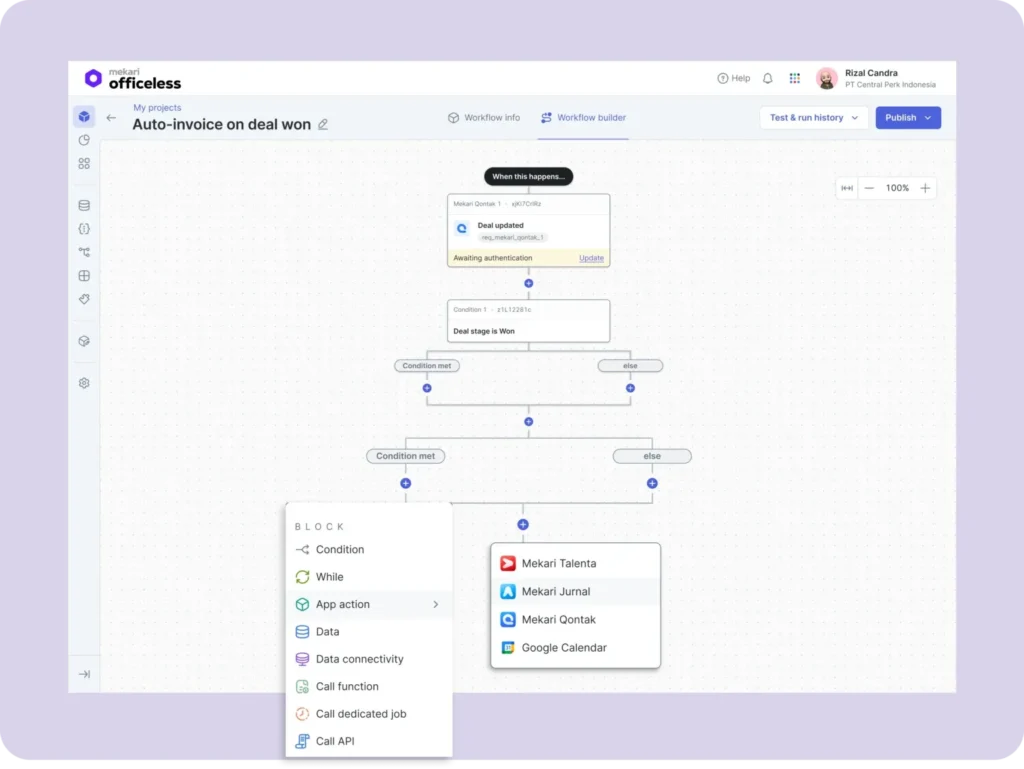
Develop workflows across teams and systems through an easy-to-use visual interface.
- Design automated workflows with a drag-and-drop interface
- Connect processes from multiple touchpoints (forms, approvals, notifications, etc.)
- Build complex business logic without writing code
- Accelerate process execution while reducing the risk of human error
Integration
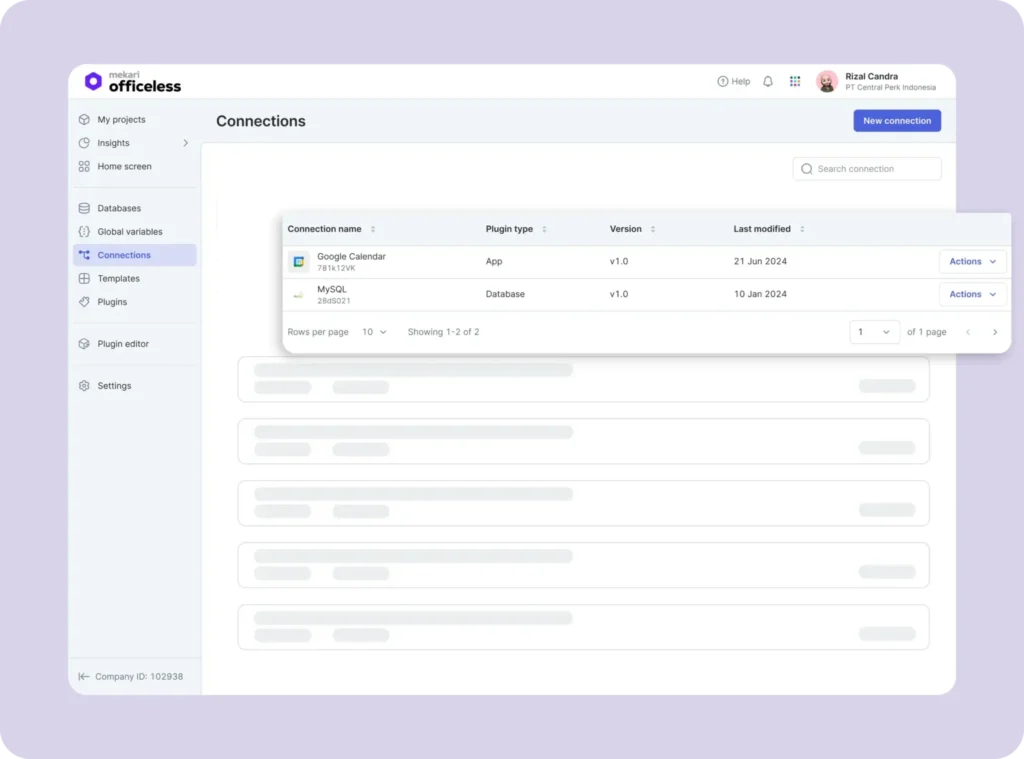
Ensure all your systems are connected and data remains synchronized.
- Connect to external software (such as SAP, WhatsApp, Artajasa, Traveloka, etc.)
- Full integration with the Mekari ecosystem
- Use APIs, events, and webhooks for two-way data communication
- Automate processes across applications without manual data entry
With these capabilities, Mekari Officeless is an ideal choice for businesses that want to simplify processes, accelerate internal development, and ensure all systems operate within a single integrated workflow.
2. Automation Anywhere
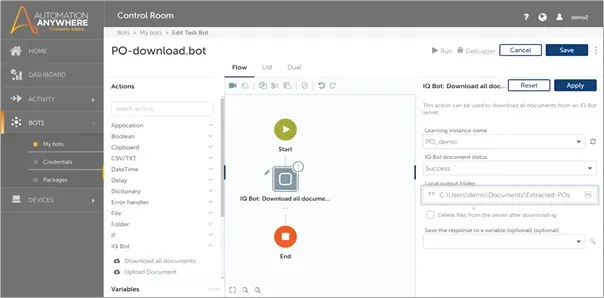
Automation Anywhere is an RPA (Robotic Process Automation) platform designed to automate repetitive business processes using software bots.
It is suitable for companies that want to accelerate routine tasks without relying on manual scripts.
Key features:
- Create bots to automate desktop applications without coding
- Manage bot execution, credentials, and security from a centralized control system
- Process unstructured data and learn from user interaction patterns
- Run thousands of bots simultaneously at scale with high flexibility
- Build automated workflows through a drag-and-drop interface
- Support deployment in both cloud and on-premise environments
- Provide predictive analytics to detect issues and measure performance
Automation Anywhere is well-suited for large organizations that require complex automation, high scalability, and real-time visibility into bot operations.
3. N8N
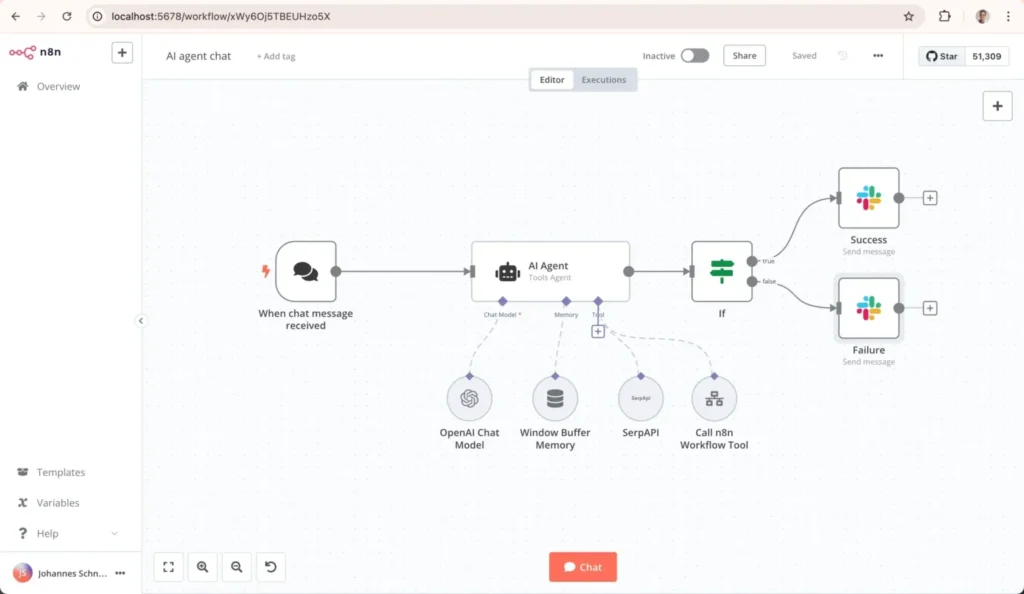
N8N is an open-source workflow automation platform that supports flexible API integrations. It is ideal for technical users who want full control over automation processes.
Key features:
- Visual interface for building workflows across applications
- Support for more than 350 built-in integrations
- Can be self-hosted or used via the cloud
- Supports complex data processing and custom scripting
Because it is open-source and extensible, n8n is ideal for developers or technical teams that want to build advanced automation without vendor limitations.
4. Zapier
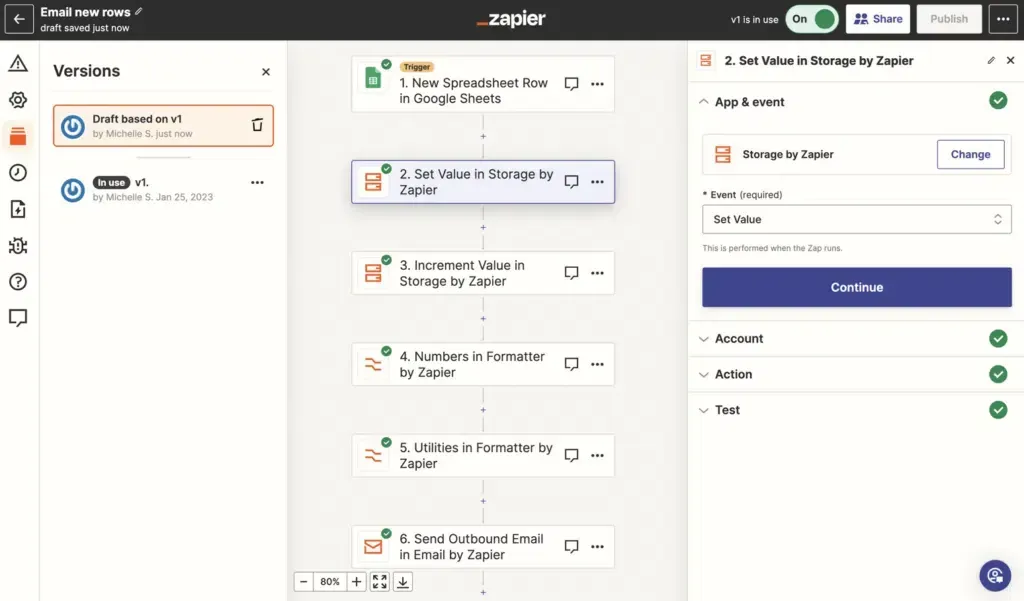
Zapier is one of the most popular workflow automation platforms, enabling integration with more than 7,000 applications. It is widely known for its ease of use and suitability for non-technical users.
Key features:
- Create automated workflows (Zaps) across popular apps such as Google Sheets, Slack, and HubSpot
- AI assistant to help build workflows faster
- Integration support with external AI tools such as OpenAI and Jasper
- Drag-and-drop interface with customizable triggers and actions
Zapier is ideal for marketing, sales, or customer support teams that want to automate daily workflows without writing code.
5. Lindy
Lindy is a no-code platform for creating custom AI agents (called “Lindies”) that can handle various business tasks, from email management to content creation.
Key features:
- Create Lindies with a Zapier-like UI (trigger-action canvas)
- AI triggers: workflows can start from AI instructions, not only rules
- Integration with more than 50 applications
- Ready-to-use templates for tasks such as meeting preparation, email triage, or converting podcasts into blog posts
Lindy allows users, even without technical backgrounds—to build interconnected AI agents that can interact with each other. It is ideal for small teams or individuals who want automation without technical complexity.
6. Gumloop
Gumloop is a no-code AI automation platform that is more technical than Lindy but highly flexible for building modular AI-based workflows.
Key features:
- Drag-and-drop builder with nodes to design workflows
- Subflow functionality to create mini workflows within a main workflow
- Interfaces that allow external parties to trigger workflows
- More than 90 ready-to-use templates for use cases such as contract analysis or internal link discovery
Gumloop is suitable for technical users or developers who require deeper control when building large-scale automation while still avoiding full coding.
7. Mindstudio
MindStudio is an AI workflow platform that supports custom LLM development, plugin integration, and usage tracking. It is suitable for users who want to develop internal LLM-based solutions.
Key features:
- Create and use private LLM models
- Plugin integrations to extend workflow functionality
- API support and internal knowledge base integration
- Ready-to-use templates such as emotion analysis, resume screening, and ad campaign idea generation
MindStudio excels in AI personalization for specific business needs and is suitable for organizations looking to build LLM-based systems with full control.
Baca Juga: How to Accelerate Agile Software Development with Low CodeBest workflow automation recommendation
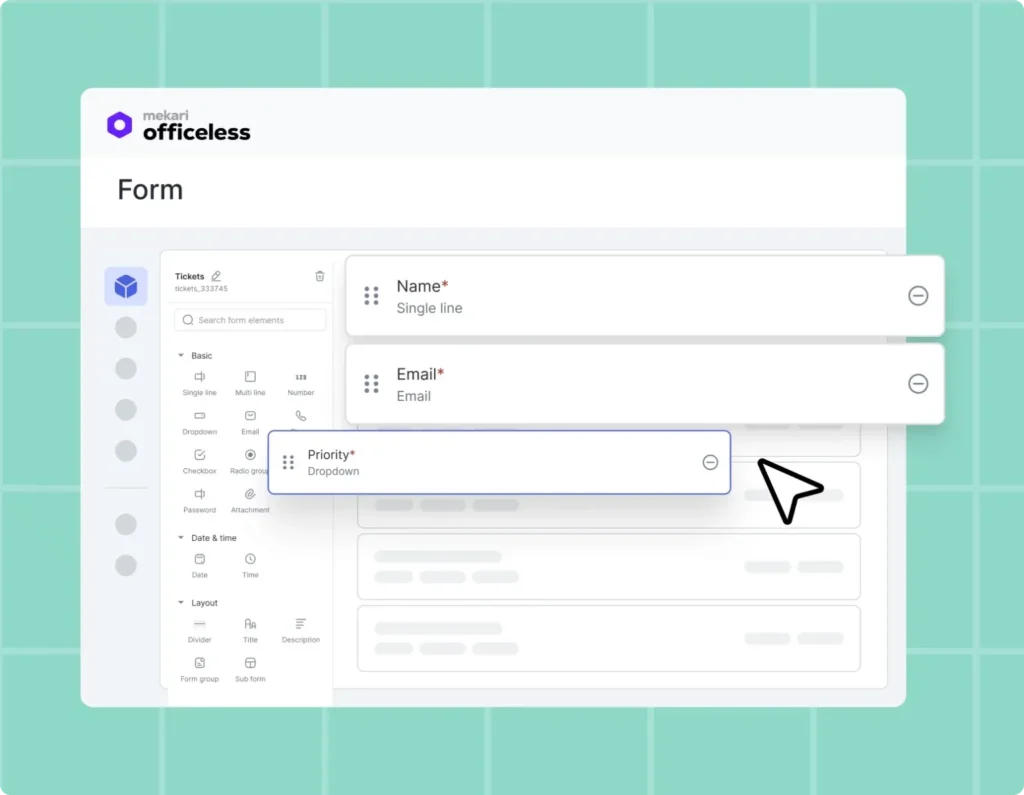
If you are looking for a workflow automation platform that is flexible, easy to use, and ready to integrate with various systems, Mekari Officeless is an excellent choice.
As a low-code/no-code platform, Officeless enables cross-functional teams to build automated workflows without writing code from scratch. Processes that once took weeks can now be designed in hours.
Some key advantages that make Mekari Officeless stand out include:
- Strong integration capabilities, supporting connections with various external systems such as SAP, WhatsApp, and marketplaces, while also connecting natively with the entire Mekari ecosystem
- Ease of workflow creation, supporting connections with various external systems such as SAP, WhatsApp, and marketplaces, while also connecting natively with the entire Mekari ecosystem
- Support for APIs, events, and webhooks, ensuring data remains synchronized and cross-system processes run automatically without disruption
With a combination of ease of use and technical flexibility, Mekari Officeless is ideal for businesses that want to accelerate digital transformation without the complexity of integration.
References
Flowforma. ”Top 5 AI Workflow Automation Tools for 2025”
Slack. ”9 Best AI Automation Tools to Automate Tasks and Streamline Workflows”
