



Mekari Insight
- Enterprise data integration is the process of consolidating data from various systems such as business applications, databases, cloud platforms, and legacy systems so it can be used consistently across the organization.
- With enterprise data integration, companies can reduce data silos, improve data quality, and generate more accurate business insights to support data-driven decision-making.
- Mekari Officeless supports enterprise data integration through custom workflows that allow companies to connect operational systems, automate data flows, and present information through a unified dashboard.
Enterprises operate many applications every day, creating one major challenge: data scattered across different systems. When applications are not connected, data becomes fragmented and increases the risk of data silos.
As a solution, enterprise data integration can be implemented as an approach to combine cross-system data and generate complete, structured data reports.
Overview of enterprise data integration
Enterprise data integration is the process of unifying data from various sources such as databases, business applications, cloud platforms, and legacy systems.
It goes beyond simply moving data from one system to another. Instead, it ensures that data across departments, systems, and technologies can work together seamlessly.
This approach has become a critical component in modern technology development. According to Precedence Research, the enterprise data integration market is projected to reach USD 43.38 billion by 2033, nearly tripling its value compared to 2023.
This growth shows that data integration is no longer just a technical requirement, it is becoming a key factor in supporting business growth and regulatory compliance.
Why enterprise data integration is important for businesses
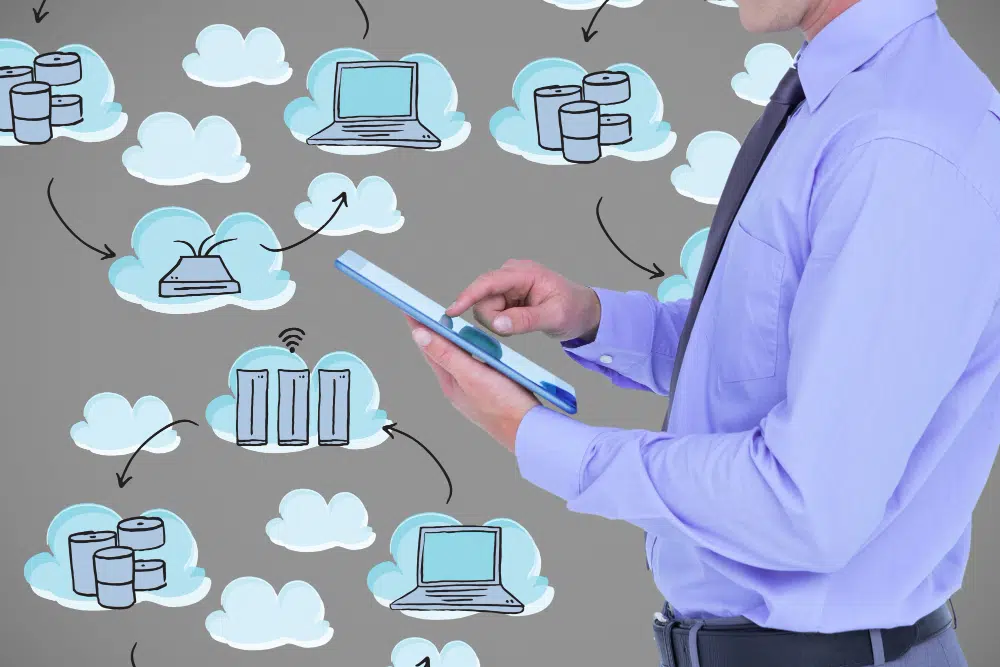
When data is not properly integrated, the impact is felt across every department. Analysis becomes time-consuming because teams must manually combine reports from different systems.
Enterprise data integration helps organizations overcome these challenges by providing consistent and reliable access to data across all company systems.
The need for integration often becomes apparent when companies experience operational issues related to data management.
Signs a company needs enterprise data integration:
- Data trapped in silos: Sales, marketing, and operational data stored in separate systems make it difficult for companies to gain a complete view of the business.
- IT teams cannot keep up with requests: IT teams frequently receive requests for data connectors or one-time data extraction. Increasing requests prevent them from focusing on more strategic work.
- Manual processes: Without data integration, analysts must manually merge and format data before using it. This slows reporting cycles and increases the risk of errors.
- Disorganized hybrid environments: The combination of cloud platforms and on-premises systems can create fragmented and difficult-to-manage data environments.
- Difficult data governance: Scattered data makes it harder to monitor information, enforce security policies, and maintain audit trails.
- Lack of real-time insights: Without proper integration, companies rely on batch reports that may already be outdated by the time they are generated.
Baca Juga: A Guide to Easy SaaS Implementation: Best PracticesKey objectives of enterprise data integration
Enterprise data integration delivers several business benefits, including:
1. Better decision-making
By consolidating data from multiple systems, companies gain a more comprehensive view of business performance and operations, enabling more accurate data-driven decisions.
2. Improved data quality and consistency
Data integration enables organizations to apply consistent data quality standards across systems while creating a reliable source of truth and reducing duplicate data.
3. Increased productivity
Enterprise data integration reduces manual work by automating data flows between systems, helping operations become more efficient and measurable.
4. Governance, compliance, and security
Well-managed data integration enables companies to monitor data access, track activities, and maintain compliance with regulations such as GDPR and other industry standards.
5. Reduced IT infrastructure costs
Through data integration, companies can consolidate data systems and reduce complex point-to-point integrations, lowering infrastructure maintenance costs.
Baca Juga: Enterprise Application Modernization: Guide & Key StrategiesChallenges and solutions in enterprise data integration
Although beneficial, implementing enterprise data integration also presents several challenges.
1. Poor data quality
Collecting data from various systems can lead to poor data quality, such as duplicated data or inconsistent information.
Solutions:
- Implement data cleansing and data standardization processes
- Use a data governance framework to ensure consistency
- Conduct regular data audits
2. Incompatible data structures
Incompatible data formats are common because companies collect data from multiple sources such as cloud services, CRM systems, and other platforms that have different formats, structures, and schemas.
Solutions:
- Use an integrated platform to simplify data transformation
- Apply standardized data models
- Manage metadata consistently
3. Integration complexity in hybrid environments
Companies that combine cloud systems and on-premise infrastructure are often vulnerable to integration challenges within hybrid environments.
Solutions:
- Use platforms that support cloud, on-premise, and edge systems
- Implement data virtualization to unify data access
4. Large data volumes
Large data volumes can slow down integration processes and increase the risk of errors. Enterprise-scale integration therefore needs to handle large datasets without disrupting system performance.
Solutions:
- Optimize large-scale data processing using ETL (Extract, Transform, Load) or ELT (Extract, Load, Transform)
- Use parallel processing and data partitioning to break down large datasets
- Monitor data flows and capacity regularly
5. Real-time data requirements
In integration processes, companies often face challenges in synchronizing data in real time because legacy systems may not support real-time operations, which can lead to network constraints and system stability issues.
Solutions:
- Use event-driven architecture or change data capture (CDC) to support real-time data integration
- Implement micro-batch processing to maintain data updates.
6. Data security and compliance
Integration across multiple systems creates additional access points that can increase security risks if not properly managed.
Solutions:
- Implement data encryption
- Apply strict access control
- Conduct regular security audits
Enterprise data integration methods
To implement enterprise data integration, companies can use several methods depending on their needs.
Enterprise Application Integration (EAI)
This process is commonly used to synchronize systems such as ERP, CRM, and finance through APIs. The goal is to ensure system updates occur consistently while reducing fragmentation.
Data consolidation
Combining data from multiple systems into a data warehouse or data lake using ETL processes to provide a single source of truth for reporting and business intelligence.
Data replication
A method that transfers data from one system to another on a scheduled basis to maintain synchronization between systems.
Data virtualization
A unified view of data from multiple sources without physically moving the data. This approach allows companies to access data in real time through a single integration layer.
Hybrid integration
An integration method that combines cloud and on-premises systems to connect various applications within a unified architecture.
Baca Juga: 7 Best AI & Workflow Automation SaaS ToolsHow Mekari Officeless helps companies implement enterprise data integration
Implementing enterprise data integration requires a platform capable of connecting multiple business systems without adding unnecessary complexity.
Mekari Officeless implements enterprise data integration through custom workflow, where cross-system data connections are built directly inside the workflow itself.
This service allows companies to unify data flows from various operational systems, automate processes that previously required manual handoffs, and present the results in a single dashboard without building integrations from scratch.
Custom workflow implementation in Mekari Officeless
- HR system automation: Leave balance automation, employee reprimand workflows, HR notification integration, and payroll component updates.
- CRM and customer support integration: Customer onboarding processes, support ticket synchronization, customer feedback data management, and upsell opportunity detection.
- Sales and marketing automation: Automatic lead distribution, campaign response tracking, and prospect data synchronization across platforms.
- Financial process automation: Automatic invoice generation, financial report scheduling, bank reconciliation, and invoice-to-cash workflows to automate billing and payments.
With Mekari Officeless, companies can implement enterprise data integration by connecting various operational systems through structured workflows.
Reference
Precedence Research. “Data Integration Market Key Developments and Market Insights”

